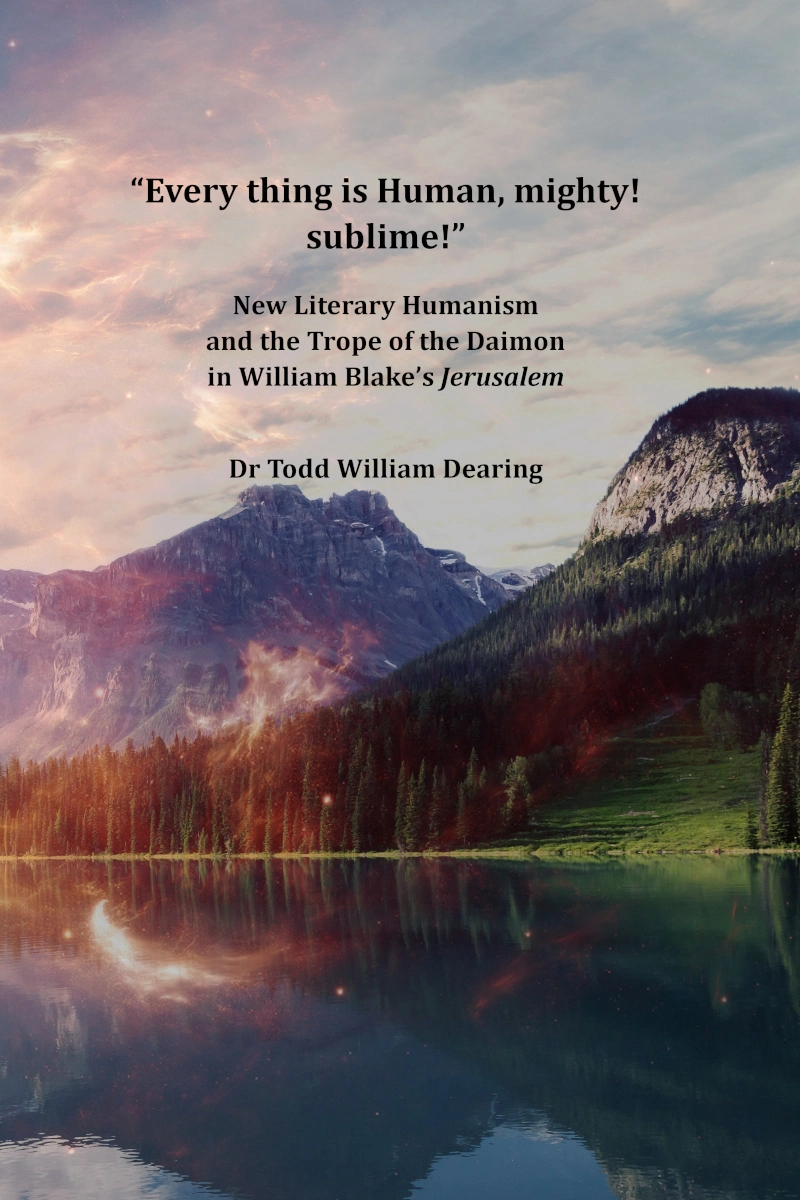
Every thing is human, mighty! sublime! New literary humanism and the trope of the daimon in William Blake’s Jerusalem
Written by Dr Todd William Dearing
Portable Document Format (PDF), 346 pages
This is the product of three years of doctorate research.
Download the PDF version for free.
DOWNLOAD PDF
(ex Sales Tax)
Literature is written by humans, read by humans, and discussed among humans. Humanness is a common factor in all literature, which is a vast record of our shared experience and imagination, encompassing many times, cultures, and perspectives. Yet recent decades in literary studies have seen human nature as a topic within literature often dehumanised—stereotyped, abstracted, or disappearing from focus.
This doctorate thesis aims to reinvigorate the study of humanity within literature, in an inclusive and meaningful way. Dr Dearing’s research into the Romantic-period painter and poet William Blake (1757-1827) illuminates Blake’s understanding of human nature within his longest illustrated poem, Jerusalem: The Emanation of the Giant Albion. Dr Dearing shows how Blake’s concept of genius provides a critical and creative methodology for understanding and developing our own humanity through literature.
This research is original, significant, and relevant because it presents Blake’s contribution to reading literature in a way that is designed to rehumanise literary studies for the twenty-first century.
0 reviews
You may also like…
-
Premium wall art
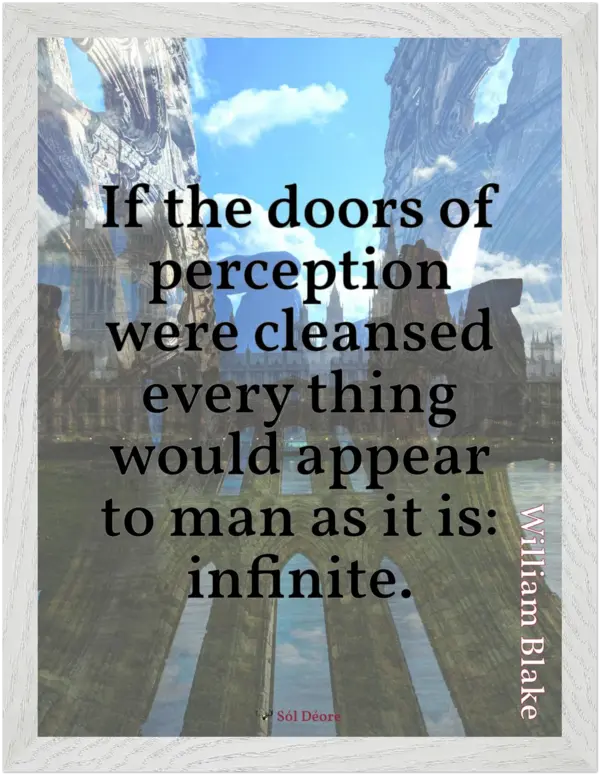
Premium matte print—If the doors of perception were cleansed (William Blake)
$59.95 Add to cart -
Premium wall art
Premium framed print—If the doors of perception were cleansed (William Blake)
$149.95 Select options This product has multiple variants. The options may be chosen on the product page